All Signals
Why Integration Wins More Often Than Replacement in Craftwork
In craftwork businesses, it's not about the number of features but how tools interact without friction or data loss. Trying to replace every system creates new operational gaps. The question isn't old versus new software—it's where islands actually disrupt process flow and where targeted integration delivers results.
In craftwork companies, integrating existing systems is usually more economical than a complete replacement, as it protects prior investment and solves the most critical data breaks first. Legacy software remains viable if it does not block process flow or keep data siloed. Clear separation of roles and handoffs between systems is what matters—not perfect feature parity.


Regional relevance can’t be designed
A strong regional brand in the skilled trades isn't created by logo design or media presence, but by actionable visibility and credibility within regional networks. Only by treating Bonn, Rhein-Sieg, and Cologne as a single reality for sales and recruitment does operational impact scale beyond classic advertising tactics. It's about concrete involvement, functional presence, and recognizable stances at the market’s real friction points.
Why Pricing Transparency Filters and Converts
Google reviews work only when the tech is right

Why the first automation often solves the wrong problem
Many craft businesses accelerate precisely those processes by automation that are already structurally unstable. Automating the wrong spot cements inefficiency instead of fixing it. The real potential lies in the right sequence and in closing the operational gaps between the core steps.

A website for your trade business: one page for Eitorf, Siegburg, Hennef and Troisdorf — or four?
You serve Eitorf, Siegburg, Hennef or Troisdorf? Why one strong website usually works better than four thin location pages — and what matters instead.

Price only emerges when comparison becomes impossible
Trade businesses often compete on price, sacrificing margin and negotiation strength. Those who reduce direct comparability, target the right clients, and communicate customer value unlock price freedom—not merely by charging more, but through positioning. This principle divides low-margin operators from truly profitable firms.
Most AI systems fail in orchestration, not inference. The hard part was never the model — it was deciding what the model should do, and when.

Without true comparability, the project is lost
A painter's website doesn't sell beauty, but decisiveness. Only well-constructed before-and-after comparisons—same angle, context, and precise mapping to services—turn case studies into trust and leads.

Trades win contracts through visibility, not price
In 2026, trades face the paradox that the cheapest business no longer wins—the most visible one does. As requests shrink and decision cycles get longer, anti-cyclical visibility at the search moment has become the crucial bottleneck. Without presence, you're essentially unfindable.

Load time isn't a metric: Mobile conversion in crafts is made at the first contact, not in scores
Crafts businesses don’t lose mobile leads due to visual design, but because mobile load time, interaction delays, and layout shifts quietly kill conversions. One speed score isn’t enough: Success requires mobile visibility, instant usability, and stable layouts so users actually complete inquiry paths.

LocalBusiness works only when consistency outweighs formalism
Perfect LocalBusiness markup won't secure rankings if addresses, opening hours, and URLs remain contradictory. The real lever for Local SEO is the consistency between visible content and structured data—not how many fields are filled.
Mobile Commitment counts — not polished forms
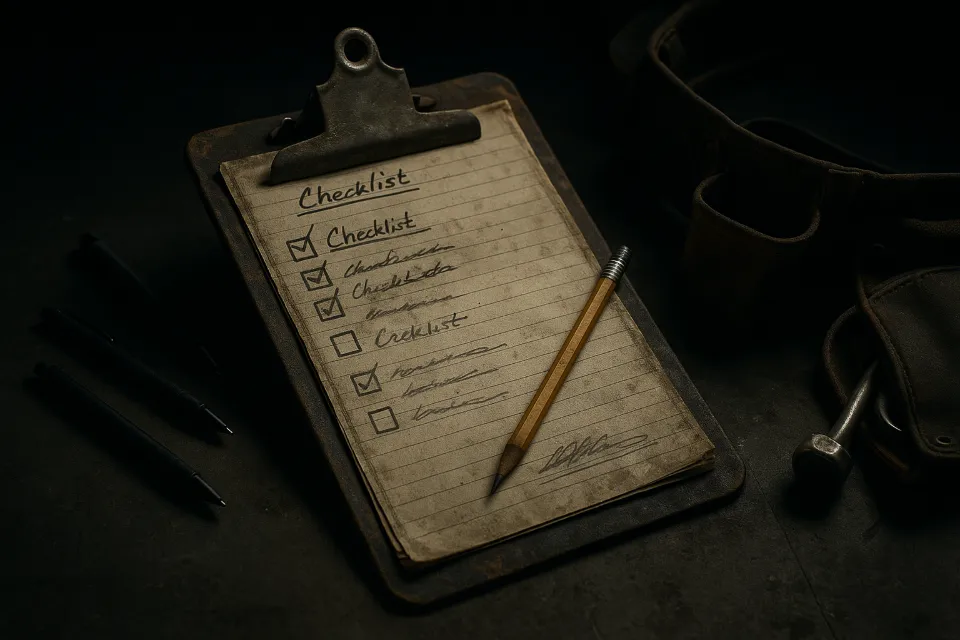
The best mobile UX for skilled trades fuses site work, customer conversation, and documentation into an uncompromising flow. Problems rarely stem from users but from systemic breaks between digital interfaces and the real moments where trust and commitment are built. True resilience is measured by offline capability, field acceptance under pressure, and the power of an on-the-spot signature—not by features.

AI Scheduling in Trade Isn’t Just Calendar Access
The main weak point of AI scheduling in trade is not technical, but lies in the handoff between inquiry, qualification, and approval. Automating only the calendar means lost jobs and more follow-ups. Only systems that map the real operational process—from first contact to completion—deliver value.
Why the static site will win for contractors by 2026
When Visibility is Sold as ROI

In the trades, first contact decides in 2026
Digital visibility, response time, and trustworthy first contact determine every new contract in the trades by 2026. Businesses that rely solely on referrals or good-looking websites remain invisible in local search. The biggest losses occur before a customer even receives a reply.

The critical split in AI-driven quoting
By 2026, companies that treat quoting as a text task will be left behind by those using measurements, photos and calculation rules to build scalable quoting workflows. The foreman is not replaced by AI; the real leverage comes from separating raw data, pricing logic, and approval. True productivity means the business retains control.

What does a website for a trade business really cost?
What does a website for a trade business cost in 2026? An honest overview of the €800–€6,000 range, the hidden running costs, and the three things that really decide its value – not the price.
The inquiry form is the invisible moment of sale
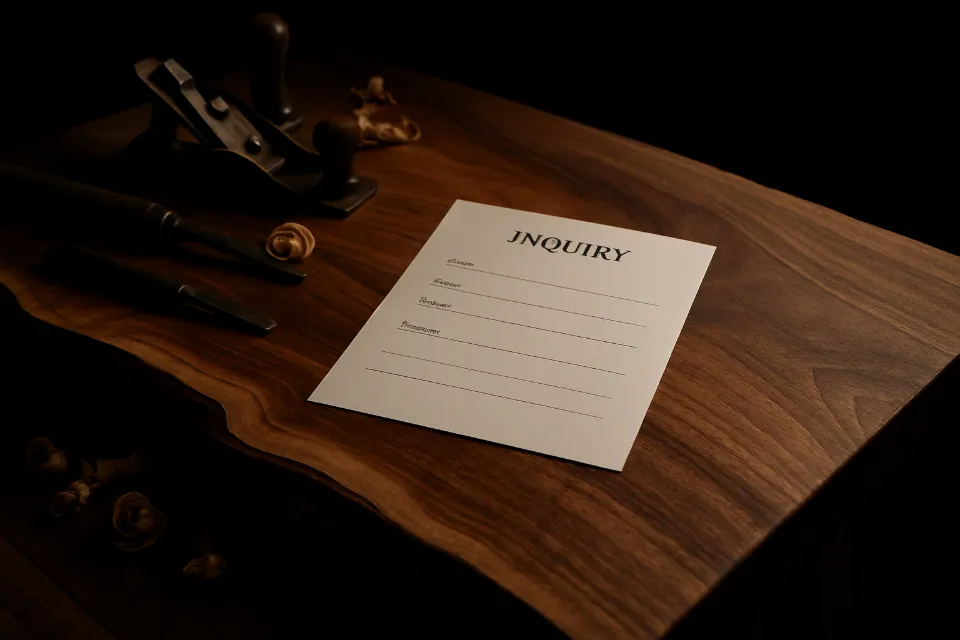
In 2026, the craftsman's inquiry form determines whether a visitor becomes a customer — or not. Without frictionless mobile handling, psychological trust, and relevant qualification, conversion is lost in seconds. The core conflict only dissolves when the form is recognized as both a decision tool and a psychological trust signal.
The real conflict starts at the boundary
Local craft visibility is never a byproduct

Local visibility is a system, not a form
A well-maintained Google Business Profile alone does not guarantee local visibility. What matters is how website, profile, and location data work together as a system. Inconsistencies undermine discoverability and trust – usually invisible, but acutely felt in business performance.

Every second costs a contact in local trades
In the trades, visibility doesn’t lose you mobile customers—load time does. What matters is when the contact form is ready, not how striking your design appears.

Case studies replace decoration with proof
Trade references that are merely a gallery of polished results undermine trust at the decisive moment. Strong inquiries emerge only when references make problem, solution, and the actual effort visible—and address objections before the first call.

Prompt engineering as the control system of B2B AI
By 2026, prompt engineering in B2B AI systems is the primary mechanism guaranteeing production reliability — not through better answers, but through control and defense of system output. Teams treating prompting as a tool for better phrasing still face inconsistent results that quietly erode compliance and revenue.

Every Component Is a Contract—Not a UI Puzzle
In modern SaaS frontends, TypeScript’s main value isn’t more reuse—it’s making component contracts reliable. Blurry APIs and weak ownership models determine real speed, not the raw count of UI modules. Teams who build for variability and governance enable true velocity.

Pricing pages decide real revenue today
If you treat your pricing page like a product page, you lose conversion where business is truly won. In 2026, visuals don't decide; the key is whether pricing logic, plans, and trust signals reduce perceived risk fast enough.

The ROI of an SMB Redesign Is the Only Metric That Counts in 2026
German SMBs still view website redesigns as surface-level upgrades, while the market has shifted to evaluating websites as sales infrastructure. In 2026, the real risk is investing in sleeker looks without fixing revenue bottlenecks—paying twice: for appearance, and for persistent missed profit.

LLM pipelines only fail at the editorial gate
Fast LLM generation has moved the bottleneck: pipelines now fail less at writing and more at verifiability, style, provenance, and policy fit. Prioritizing speed over system control accumulates rework and erodes trust, even if drafts appear flawless.

Quality is a system property, not a final check
In LLM content pipelines, quality risk no longer comes from the model, but from drift between source, structure, and release. If you treat control as a final review, you only scale up mistakes. The core question: How does quality become a stable contract between data and publication?
Low Budget, High Signal: B2B Research 2026
Design System Agencies and the Figma Dilemma

When the Portfolio sells — Not Just Impresses
In 2026, a portfolio website is a filter, not a showcase: If your fit, problem, and next step are not clear within seconds, cold B2B leads walk away. Proof and specificity convert; polish alone does not.

Why React Vite Apps in 2026 Don’t Fail on Bundle Size
React Vite apps lose Core Web Vitals not on bundle size, but in the moment of first render. Teams who chase Lighthouse scores build for the build system, not the eye—and trust is lost at launch.

Mobile-first B2B is decided by intent, not by screen real estate
A mobile-first approach now determines not just B2B visibility, but real qualified conversion. Sacrifice proof, logic, or speed on mobile and your shot at closing is lost long before the desktop experience even loads.

UX Audit in B2B SaaS: Where Conversion Is Really Lost
B2B SaaS loses revenue not because of one bad page, but due to a series of small UX decisions along the full user journey. Audits focused solely on design overlook where users truly drop out: during onboarding, in navigation, at the paywall, or in trust moments. The best UX checklists reveal the exact points where users stop understanding, trusting, or moving forward.
Conversion Fails at the Audit Logic, Not the Layout
Anchor Pricing, Plans, and the Silent Churn

Access starts with UX, not with legal teams
Most companies view WCAG 2.2 as a legal hurdle, not a driver of customer experience. In reality, accessibility defines retention, growth, and brand value. Ignoring accessibility isn't just a regulatory risk—it's a threat to trust and to the bottom line.

Data is not a compass
Most companies drown in reports, yet concrete next steps remain elusive. Visualization and automation without context drive teams into blind spots rather than clarity. To extract actual value from data, decision architecture and user scenarios must become operational priorities.

When Web Design Remains Invisible to Machines
Ever more complex, visually appealing web designs drift into invisibility by 2026—for machines and, as a result, for user intent. Prioritizing aesthetics while ignoring semantics means flying blind operationally for AI and risking marginalization in the digital world.

Why Bureaucracy Is Killing Your Startup
Most startups default to Redux for state management — inadvertently installing their own growth ceiling. Rejecting flexible, lightweight solutions risks product bottlenecks and technical debt even at seed stage.

Automation scales chaos, not control
Many organizations use AI and automation to scale processes—but operational clarity decreases and accountability fades. The result: automated chaos, not managed efficiency.