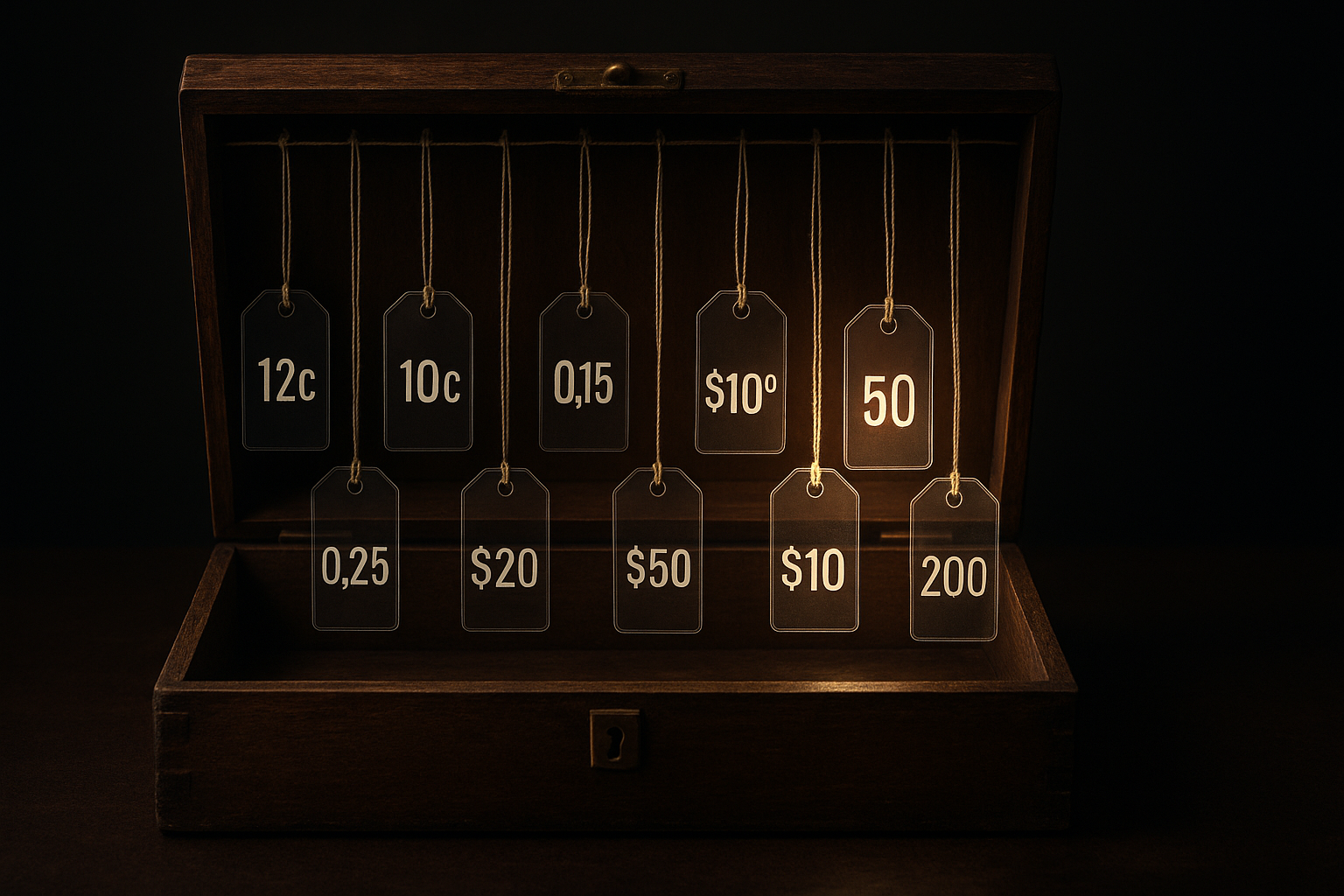
A price range on a craftsman's website doesn't increase risk—it raises inquiry quality and accelerates trust. Yet most service providers fear transparency because they see it as losing negotiation leverage. The real question: when does openness mean control, and when does it actually reinforce it?
Price range replaces guessing and stabilizes lead quality
A clearly displayed price range ensures that only realistic, pre-qualified inquiries reach the offer phase. By making their span visible, businesses don't just filter out bargain hunters—they provide clarity on project size and expectations at the very first touchpoint.
A price range isn't a discount—it's the sharpest filter against unrealistic expectations.
In the plumbing trade, for example, showing a range for full bathroom remodels usually reduces the number of inbound leads, but the percentage of serious, budget-aware inquiries rises sharply. The entire sales and quoting process becomes more focused because qualification starts online, not only after a call.
Silence turns every offer into a negotiation battlefield
Hiding prices hands all control in the initial contact over to the customer, who defaults to their cheapest fantasy about your worth. Without orientation, you are selling uncertainty—not expertise—and that cost is paid in lost, delayed, or misaligned inquiries.
- “Price on request” shifts the focus from value to discount expectations.
- The first contact becomes about trust, not about quality.
- An increase in bargain-seekers means fewer high-quality leads.
A painting business that only offers generic explanations instead of any price cues receives up to 80% of its inquiries from prospects with zero alignment to its standards.
Project size decides when transparency builds trust or triggers fear
Transparency is only an advantage when the deliverable is modular and pricing is predictable.
The more standardized the package, the more useful transparency becomes—think wall-box installations. But as complexity increases, a fixed price turns into liability: quoting a number for old-building renovations sets off alarm bells, as people expect hidden risk to show up as surprise costs.
A nuanced approach uses price anchors for standard jobs and scenario-based estimates for variable, complex work.
Price anchors work only when scope is precisely defined
A price or range only gets credibility when it’s explicit what’s included and where that responsibility ends. 'Roof renovation from €X' works as a starting rate, but without clear boundaries, every project turns into a renegotiation.
- First, establish precisely what the service scope and exclusions are.
- Then define the price range based on real-world project parameters.
- Only then communicate it online—always with project examples attached.
Skip this sequence, and you pay with more support tickets, renegotiations, and hidden costs that should have been filtered out at the web stage.
Trust comes not from low prices, but from transparent logic
Buyers are more likely to accept even high price points if the pricing logic is transparent and clearly articulated—not when it’s kept obscure for defensive reasons. A joiner who explains price tiers based on materials, planning hours, and installation quality positions as a problem-solver, not a price-hider.
Transparent pricing structures prevent needless back-and-forth and keep discussions focused on value—not discounts.
It's not the final price that converts—it's whether the buyer can follow the reasoning behind it.
Decision happens faster when the website erases uncertainty pre-contact
The clearer the online price anchor, the shorter the time from need to qualified contact. This isn't soft marketing talk—it’s reflected directly in fewer redundant questions and a cleaner pipeline for both customers and internal teams.
Any ambiguity in pricing logic wastes time—first for clients, but more crucially for the business, which gets flooded with misaligned leads that won’t ever match its budget reality.