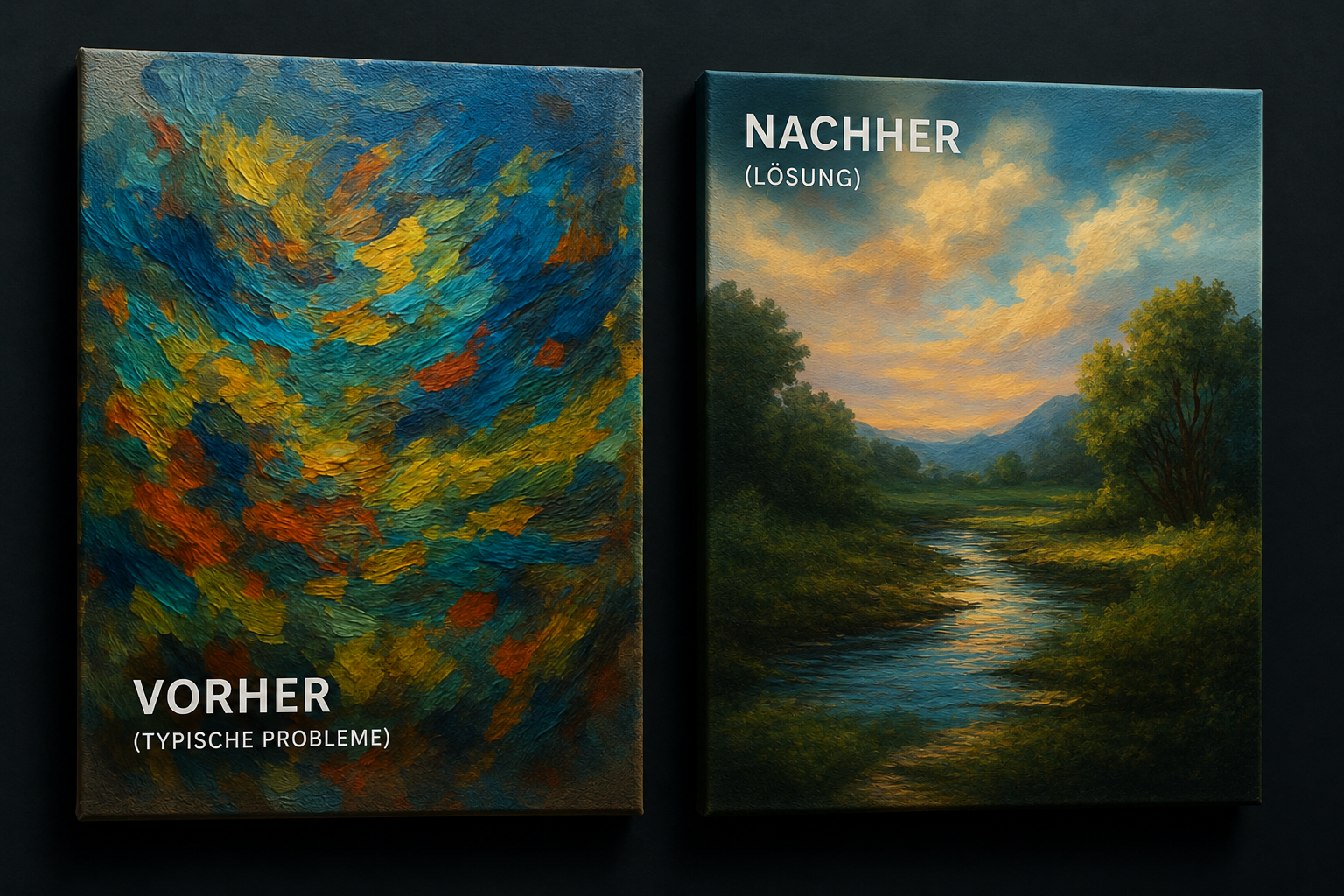
It’s the demonstrable before-and-after transformation—not just aesthetic—that dictates trust and contact on a painter’s website. Most contractors show their work without actually giving visitors any strong reason to inquire, because the transformation remains hidden or generic.
Before-and-after decides the first project, not the homepage
A deliberate before-and-after comparison triggers leads by proving a contractor can solve real problems, not just decorate. Visitors are looking for evidence that a result like theirs can genuinely be delivered.
The difference between perception and a signed contract is visual proof, not just design.
When someone looks for a painter, they want to see similar damages or old surfaces reliably restored. A slider—from a yellowed wall to a clean, repainted surface—will spark far more initial contact than a collage of pretty, staged photos. It’s only when the visitor sees a real case like their own that the website becomes an engine for sales.
Photos without context look expensive but lack credibility
Before-and-after visuals only become persuasive with concrete project context and technical details; otherwise, the result feels generic and inapplicable to the visitor’s needs.
- Only when the initial state and effort are described does a photo become a reference, not just decoration.
- Material and process details give clients confidence in repeatable quality.
- Without conditions explained, the visitor doubts whether the work could be replicated on their property.
Most contractors fail to document lighting, weather, or substrate—missing key persuasive arguments for discerning clients.
Only consistency of perspective makes the comparison persuasive
Trust starts with documented comparability, not with a staged impression.
Only before-and-after photos taken from the same position, lighting, and without wide-angle tricks build real credibility. Every deviation—shadows, angle, different time of day—signals a staged setup and undermines trust.
Photographic consistency isn’t detail work, it is the foundation for making the quality transferrable in the client’s mind. Cut corners here, and your technical authority evaporates.
Before-and-after is not an album—it's a sales tool
A painter’s website only turns before-and-after examples into jobs when each set is mapped to a specific service, a named problem, and a clear next step.
- Reference photos are clearly mapped to an explicit service (e.g. facade restoration, refinishing).
- The original problem is disclosed: what was old, damaged, or difficult?
- Contact is made easy with a clear, immediate call-to-action.
Stockpiling dozens of project images generates bulk, not momentum toward action. Only when the visitor understands what services are offered—and sees themselves in the solution path—does genuine demand emerge.
Mobile speed beats the fanciest gallery
Mobile users expect instantly visible, swipeable before-and-after elements—no matter how good the images are, they lose sales power if bogged down by slow loads or clumsy UX.
Photo optimization and touch-friendly sliders provide conversion gains; every unoptimized element kills deals on mobile.
The contract goes to the site that proves quality on mobile without making you wait.
The strongest series isn't the best single shot—it's repeatable evidence
A dazzling one-off before-and-after may impress, but only well-documented, serial examples provide convincing signals of real, repeatable skill and market reputation.
Only a series spanning apartments, facades, doors, or specialty jobs instills solid trust: the client sees not a lucky exception, but reliable professionalism as the norm.