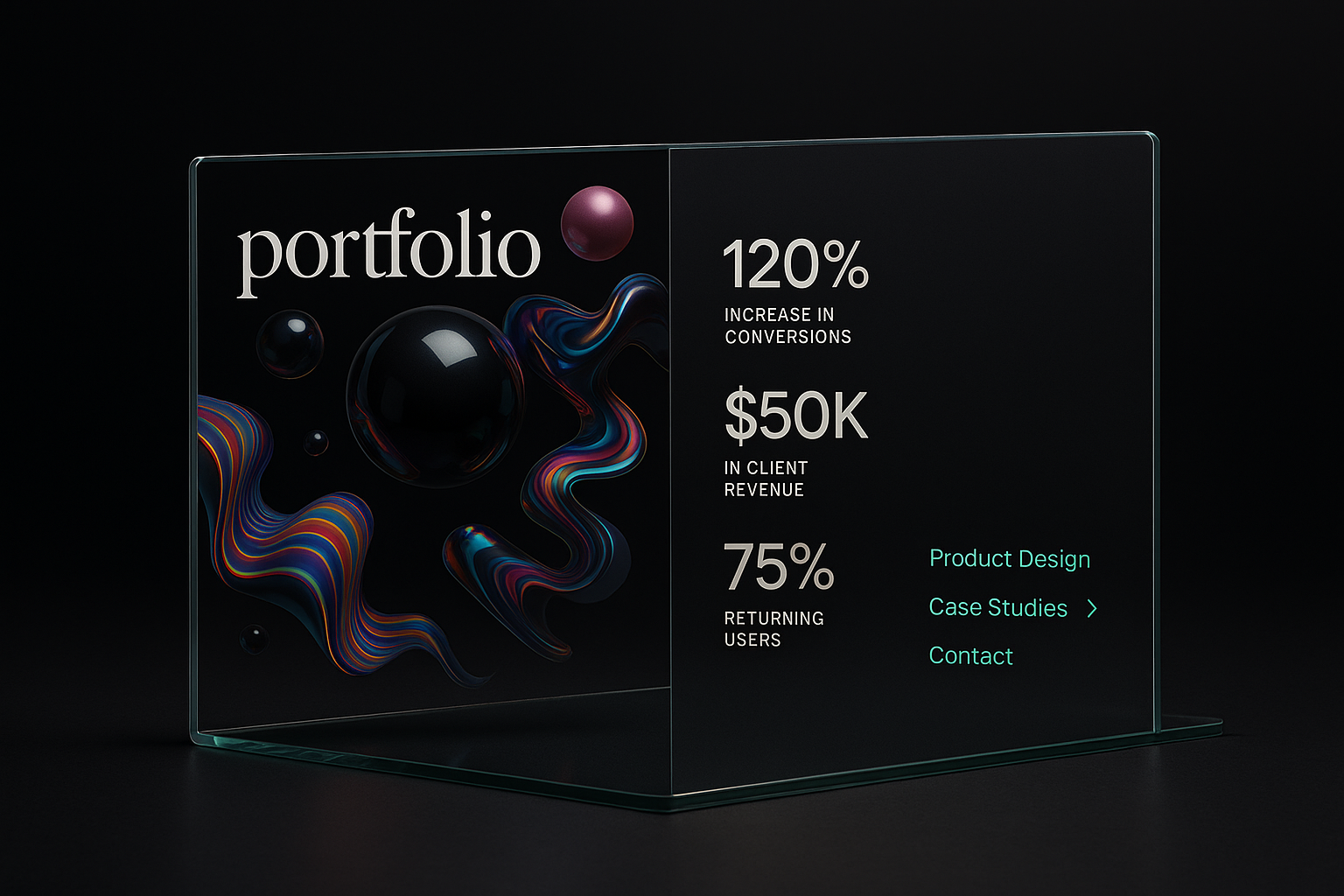
A portfolio website converts cold B2B leads when it reduces uncertainty fast: who you serve, what problem you solve, and what the next step is. In 2026, visual polish is not enough — decision makers want proof, focus, and a clear invitation to a qualified conversation.
Cold traffic rejects pretty portfolios and rewards decision clarity
A portfolio site converts cold B2B visitors when the first screen immediately communicates fit, relevance, and proof — before the reader has time to grow doubtful.
The site that looks most premium is often the first to lose — because uncertainty is costlier than lack of taste.
Cold visitors do not want a style statement; they want immediate, scannable answers: are you relevant to my sector, do you understand my problem, and can you prove you can solve it? When the homepage opens with brand manifestos, it creates distance and loses the pipeline. The homepage is not a gallery — it is the first decision filter.
Portfolio proof beats case-study theater in the first sales moment
Cold traffic only converts when case studies are structured as decision evidence, not as creative retrospectives.
- A strong case answers what specifically changed for the client.
- It names the constraints and relevant context.
- It shows why your team was credible for this precise problem.
A SaaS decision maker ignores awards, but scrutinizes whether demo-to-close conversion or enterprise trust materially improved.
Generic services kill conversion on portfolio pages
If you try to do everything, you speak to no one with real buying intent.
The broader your service menu, the less believable you are to cold buyers. Listing ten expertise areas signals nothing-specific; framing your offer around a critical, painful business use case makes you actionable and memorable. A clear ICP and an explicit use case are the difference between casual traffic and true leads.
The contact page decides whether anonymous interest becomes pipeline
A portfolio generates more pipeline when the path to contact adapts to each buyer’s readiness — not by forcing everyone to the same generic form.
- Enable direct contact — email, calendar link, or phone.
- Offer pre-qualification questions for mature buyers.
- Surface reference or proof assets for quiet decision makers.
If the only CTA is 'Get in touch,' you lose decision makers who want to determine fit or see proof first. Qualified handoffs come from multiple pathways — not from a flood of forms.
Cold intent is visible in the page path, not the traffic volume
In practice, repeat visits to pricing, sector, or case study pages are stronger lead signals than anonymous traffic spikes.
The best portfolios don’t measure conversion by headline traffic — they read behavior: which pages see repeat activity, which proof points draw attention, who returns to sector or pricing content? Value is revealed in the pattern, not the volume.
Traffic flatters the analytics dashboard — actual buying intent is only visible in cross-page behavior.
Conversion fails when the portfolio is written for peers instead of buyers
A portfolio site loses cold B2B leads when the content and voice resonate mainly with creative peers, not with buyers who have business goals.
What impresses colleagues — design lingo, systems talk, visual craft — often increases buyer uncertainty: can this agency deliver revenue, speed, and stakeholder buy-in? The site’s voice must translate expertise into business logic — making the value legible, not just showing off the work.