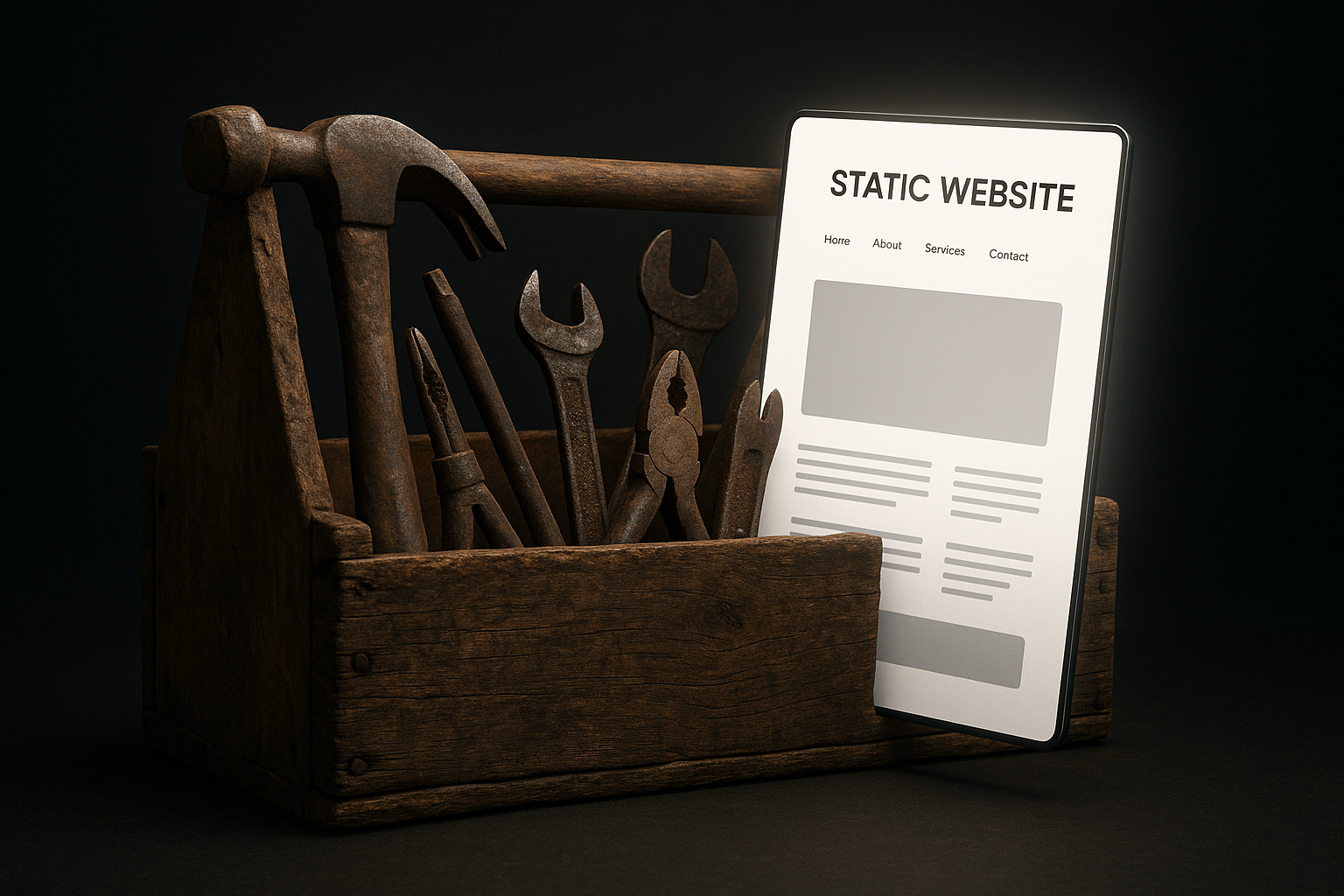
For most contractors by 2026, a classic static website is the smarter financial move when updates are rare and service needs are stable. WordPress appears affordable at first, but ongoing costs from support and maintenance tip the balance over time.
The startup cost of WordPress is rarely the problem—it's the ongoing bills that matter
WordPress looks attractive at the bidding stage because initial fees are low. But over time, maintenance, plugin licenses, and security work are the true cost drivers. Cost calculations often stop at launch and ignore real in-life expenses.
The cheapest website becomes the most expensive project when maintenance and security are neglected in daily operations.
A painting company pays a defined fee for a WordPress package and often underestimates ongoing hosting, premium plugin, and update costs. Within three years, the total spend typically overshoots the original project sum.
A static site isn’t minimalism—it’s cost control for contractors
A static website isn’t about cutting corners—it’s a deliberate escape from avoidable operational spend.
Static sites remove the recurring time and financial investment needed for database and plugin management. For content that changes rarely, this architecture aligns more with real service business needs than a full-blown CMS.
Many trades and construction firms report fewer than four annual website changes—a level that never justifies a fully managed CMS.
WordPress only pays off when you actually manage your own content
WordPress only becomes a financial asset if your business truly makes regular updates and posts news or offers online. Otherwise, its complex tools turn into idle overhead.
- Having an in-house editor justifies hands-on CMS management.
- No blog, team login, or news? The backend sits idle.
- Any feature you don’t use becomes a sunk expense.
- Static sites reflect the actual content needs of smaller firms.
Smaller contractor teams rarely produce digital updates themselves, so the CMS cost never returns practical value.
It’s maintenance that sets the real website price for contractors
Ongoing WordPress maintenance is the top hidden cost—often missed for months or even years. Without clear support routines, you build dependence and open the door for expensive mistakes.
Support cases for plugin conflicts and failed contact forms spike after update gaps—catching up later always costs more than proactive care.
A neglected site accumulates maintenance debt—and even minor fixes turn pricey.
Lock-in from builders and heavy CMS platforms is widely underestimated
The more complex the solution, the riskier and costlier each future migration or provider switch becomes—yet this almost never gets budgeted. Your platform choice locks in not just launch spending, but all future project work too.
- Builder platforms limit code ownership and complicate content migration.
- Plugin-heavy setups make upgrades risky.
- Switching hosts may require rebuilding from scratch.
- Static sites export cleanly without lock-in or technical friction.
If you choose a tightly integrated system now, you restrict future investments and flexibility. Real costs emerge only at the first difficult migration.